
At the forefront of Europe’s battle against infectious diseases stands the European Centre for Disease Control (ECDC). By ardently monitoring health threats, the ECDC plays a pivotal role in shaping the continent’s public health landscape. In this piece, we’ll traverse the ECDC’s evolution, its integral functions, and its undeniable influence on policy-making decisions.
Established in 2004, the ECDC emerged as Europe’s concerted response to the need for improved defense against infectious diseases. Recognizing the significance of a united front, the agency set its sights on providing the EU with a powerful mechanism to identify, assess, and combat health threats.
- Disease Surveillance & Monitoring: Central to the ECDC’s mission is the relentless monitoring of infectious diseases across Europe. This consistent oversight ensures that the continent stays one step ahead of potential outbreaks.
- Data Consolidation: The ECDC meticulously gathers health data, providing a comprehensive view of disease trends and aiding in rapid response strategies.
- Public Awareness & Communication: Bridging the gap between data and the populace, the ECDC disseminates crucial health information, ensuring Europeans are well-informed and prepared.
Guided by its insights, the ECDC significantly influences European public health policies. Decision-makers frequently turn to the agency for expert advice on a wide range of health issues, from vaccination campaigns to emergency response strategies. Consequently, the ECDC stands as a pillar in the policy-making process, ensuring decisions resonate with real-time health data and needs.
From a public affairs vantage point, closely monitoring the ECDC’s actions is indispensable. This vigilance allows a diverse array of stakeholders, including health professionals, advocacy groups, and the wider public, to engage constructively with the agency’s decisions. In doing so, it ensures the ECDC remains transparent, accountable, and attuned to the public’s needs and concerns. This engagement fosters trust and collaboration, amplifying the agency’s efficacy.
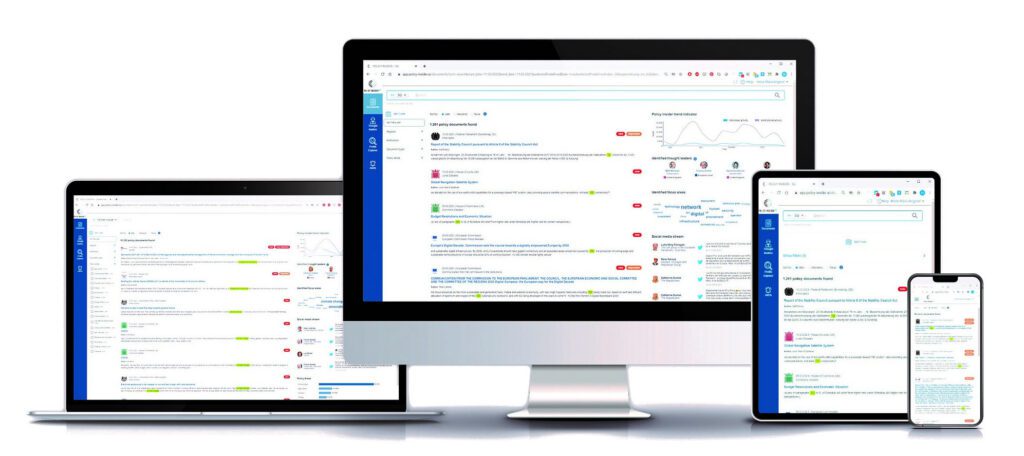
Start monitoring the ECHA with welcome.policy-insider.ai/
– three days free –
Here’s a list of institutions within Europe that function similarly to the ECDC in their respective countries, focusing on disease control and public health:
- United Kingdom – Public Health England (PHE): www.gov.uk/government/organisations/public-health-england (included on welcome.policy-insider.ai/)
- Germany – Robert Koch Institute (RKI): www.rki.de (included on welcome.policy-insider.ai/)
- France – Santé publique France: www.santepubliquefrance.fr (included on welcome.policy-insider.ai/)
- Spain – Instituto de Salud Carlos III (ISCIII): www.isciii.es (included on welcome.policy-insider.ai/)
- Italy – Istituto Superiore di Sanità (ISS): www.iss.it
- Netherlands – National Institute for Public Health and the Environment (RIVM): www.rivm.nl
- Sweden – Public Health Agency of Sweden (Folkhälsomyndigheten): www.folkhalsomyndigheten.se
- Poland – National Institute of Public Health – National Institute of Hygiene (NIZP-PZH): www.pzh.gov.pl
- Portugal – Directorate-General of Health (DGS): www.dgs.pt
- Norway (Not an EU member but relevant in the European context) – Norwegian Institute of Public Health (FHI): www.fhi.no
Beyond Europe, several institutions mirror the ECDC’s objectives on a global scale:
- World Health Organization (WHO) – www.who.int (included on welcome.policy-insider.ai/)
- Centers for Disease Control and Prevention (CDC) – USA – www.cdc.gov
- Public Health Agency of Canada – www.canada.ca/en/public-health.html
- China CDC – www.chinacdc.cn
- Brazilian Ministry of Health’s Health Surveillance Secretariat – www.saude.gov.br
The European Centre for Disease Control (ECDC) epitomizes Europe’s unwavering commitment to public health. With monitoring at its core, the ECDC ensures that Europe remains prepared, informed, and resilient in the face of health challenges.
Meta Description: “Dive deep into the ECDC’s role in monitoring Europe’s health, its influence on public health policy-making, and the value of public affairs engagement in the process.”